Disclaimer: This article is about cancer and is for educational and research purposes only. Please seek professional assistance with your suitably qualified professional for the treatment of any disease. This article does not advise the taking of any homeopathic preparations or other treatments for cancer.
Cancer is one of the most powerful words in our lexicon. If you know someone or are yourself someone who has been given a cancer diagnosis, you can attest to the process often experienced after receiving the news. Dr Toni Lindsay, Clinical psychologist at the Chris O’Brien Lifehouse suggests:
“We know that after people hear the word ‘cancer’ they don’t process much else of what they hear.”
 Education about cancer may not protect us from experiencing this effect as Dr Charlotte Tottham shared when she was given a diagnosis. You can drop into her experience at this podcast. It is fair to say that there is no one cancer journey and many possible different experiences for the same diagnosis.
Cancer itself has been known for several millennia, evidence of its existence documented in ancient Egyptian papyri. It looks like the word was defined by the Greek physician Hippocrates around 400BC (). It is quite possible the power of the word cancer arises with our collective belief from experience that death will soon follow, with no cure possible.
Remission Rates
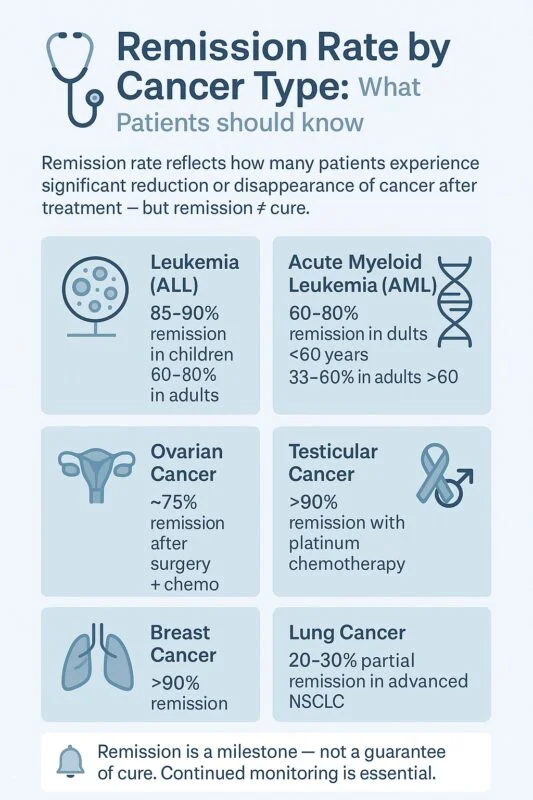
Source: https://oncodaily.com/oncolibrary/remission-rate-in-cancer
Since the 20th century, medical science has progressed with the treatment of many types of cancer. The word “remission” is preferred to the word “cure”. It means a state with no signs of cancer and no treatment required, where the patient is cancer free for 5 years. The word “cure” is not used, as it is not possible to predict or know for any one person whether cancer will return. Today the endgame for many cancers is not a death sentence. Yet the word continues to hold enormous power.
Conium maculatum
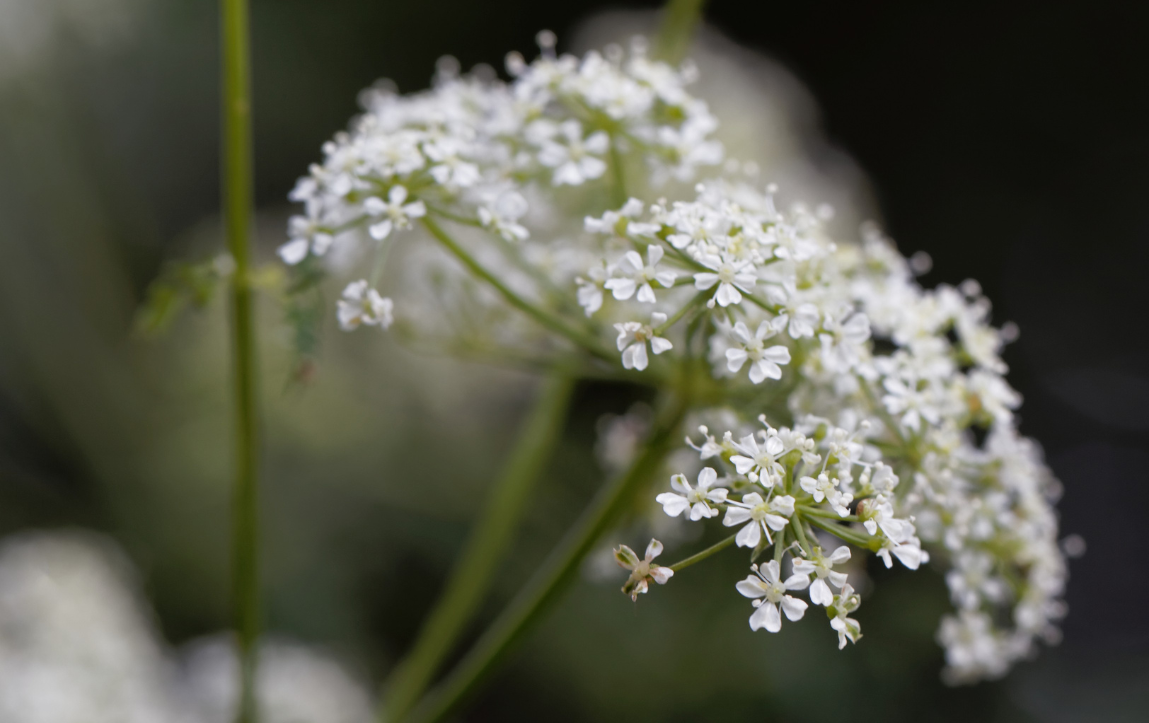
Conium maculatum is a homeopathic remedy with a long history. Its common name “poison hemlock” is the liquor most likely taken by Socrates to end his life. In homeopathy it has a long association of benefit for cancerous growths, tumors, and particularly those of the breast and mammary glands. It is interesting to consider that while cancer has been around for millenia, so has a medicine that seems to have a strong affinity for cancer.
What we know through the provings and clinical data in homeopathy is that Conium maculatum is well indicated for cancerous states of the breast and mammary glands, hard, painful cancers, cancers that quickly spread to other parts of the body. It is also seen in axillary cancers and cancers that bleed. Morrison’s Desktop Guide describes the Conium state in more detail: where complaints start and progress slowly, a progressive hardness that ends in malignancy, the hardness is seen in all spheres, mind, emotions and body. This knowledge arises from our traditional methods of understanding a remedy and its effects, as well as 200 plus years of clinical practice. Conium maculatum has many features that help a professional homeopath determine whether or not it would be helpful for any individual patient.
Today we also have the ability to explore how homeopathic remedies act on disease states directly, as well as update our understanding of what those disease states are. Homeopathic remedies can have very specific spheres of action. Conium symptoms appear in Hahnemann’s Materia Medica Pura and are again expanded in Chronic Diseases, which was originally published in the 1830’s, showing that the symptoms have been described since the 1830’s.
Today there is a continuing growth and understanding of the nature of cancer, causes, the DNA, gene expressions and heritability, the influence of environmental and hormonal effects on the cancer. Likewise, all new cancer treatments are supported by extensive scientific investigation, progressing from in vitro studies to clinical trials. Historically the considerable traditional knowledge of homeopathic remedies used in treating people with different types of cancer is present. The same tests and protocols used to test potential new cancer drugs, can also be applied to homeopathic preparations to see how they directly affect cancer cells and growth.
One method of assessing cancer treatments is to conduct in vitro studies of cancer cell lines. To test whether a treatment will be effective for a particular cancer, a cell line is grown from the cancer cells in the laboratory and tested. The characteristics of late stage aggressive forms of breast cancer, for example a triple negative breast cancer tumor, can then be tested. MDA MB 231 is one such cancer cell line used to test whether a treatment will be effective in vitro and in vivo. This type of cancer tends to quickly metastasise to bone and lymph glands.
In a laboratory study Conium maculatum was applied to cancer cell line MDA MB 231 in a variety of potencies as well as control. The results for the tincture and 1M potencies showed the greatest evidence of apoptosis and cytotoxicity to the cancer cell line. The conclusion of the laboratory study state:
“All these molecular profiling data showed that Conium maculatum tincture and 1M potency exhibited anti-cancer properties in breast cancer cell line MDA MB 231.”
The exciting thing about this type of study is that it brings together a modern testing approach for a homeopathic remedy to show real biological changes to human cells. Testing a remedy in the in-vitro context breaks down the incorrect (but commonly held) belief that homeopathic remedies only work through belief, or not at all. A cell line does not have consciousness or the ability to believe, so ipso facto if you believe this is how homeopathic remedies work, nothing should happen in the cell line tests.
The fact that an aggressive cancer cell line can be positively affected by a homeopathic remedy in 1M potency is quite remarkable
Just let that sink in for a moment. Something that shouldn’t have any affect at all, is shown to kill cancer cells. The fact that in this study it is a remedy known traditionally for treating breast cancer is even more incredible. Modern scientific methods connect to traditional clinical experience and traditional materia medica. In 1830’s our traditional proving data, materia medica, shows Conium maculatum as a key remedy for breast cancer. In 2023, for the MDA MB 231 cell line Conium maculatium in 1M potency demonstrated anti cancer properties.
This work is very new. It was presented at the HRI conference in 2023.
We have the Rajiv Gandhi Centre for Biotechnology, Thiruvananthapuram, Kerala, India to thank for hosting the work of Bindu John Pulparampil and Paul Niasha from Vinayaka Mission Deemed University, Salem, Tamil Nadu, India, and S. Lakshmi from the Regional Cancer Centre, Thiruvananthapuram, Kerala, India for undertaking this work.
Let us hope that they can continue with more studies, repeated studies and that others can do this work as well, building a body of evidence supporting our traditional knowledge.
